
What Standard POTS Testing Can Miss
You feel lightheaded, foggy or detached every time you stand. Maybe you get headaches, or a wave of anxiety you can't explain. But when you were tested, your heart rate and blood pressure came back normal, or close enough that nobody seemed concerned.
That doesn't mean nothing is happening. Most POTS testing measures your heart and your blood pressure. It usually doesn't measure the thing that matters most to how you feel when you're upright: blood flow to your brain.
At Pro Performance Care in Needham, we measure it directly, while you're tilted upright, alongside your heart rate, blood pressure, breathing and CO2.
What a standard tilt test measures, and what it leaves out
A standard tilt test watches your heart rate and blood pressure as you're moved from lying down to upright. It's a well-established test, and hospital POTS physicians rely on it.
But picture a common result: when tilted, systolic blood pressure dips slightly, diastolic rises slightly, and heart rate climbs only 10 to 15 beats per minute. On paper, that's a fairly normal response to standing. Yet the person on the table feels lightheaded, confused or detached, or gets a headache.
What's missing is a measure of the brain itself. Blood flow to the brain can drop when you're upright even when your heart rate and blood pressure look fine. That pattern is sometimes called orthostatic cerebral hypoperfusion, or OCHOS. A test that never looks at the brain can't see it.
Why isn't brain blood flow measured more often? The equipment, transcranial Doppler, is finicky, and running it well during a tilt is a skill that takes training and practice. So many standard tilt tests leave it out.
Transcript: Blood pressure and heart rate are normal, but I'm still dizzy when I stand up. If this is you, you might be dealing with orthostatic cerebral hypoperfusion syndrome, or OCHOS. OCHOS happens when blood flow to the brain is reduced when you stand. The tricky part is that because OCHOS occurs in the brain, standard blood pressure and heart rate monitoring often won't detect it. Doppler ultrasound is an advanced tool that lets us see how blood flows to your brain during specific tasks, like standing. When typical tests don't show any problems, it helps us understand what's really going on. By using Doppler ultrasound, we can accurately detect OCHOS and give you the right treatment to help you manage your symptoms. Don't ignore those dizzy spells. Reach out today to see how Doppler ultrasound can help you manage OCHOS and improve your quality of life.
What transcranial Doppler adds
Transcranial Doppler is a non-invasive ultrasound. Small probes held in a lightweight headset rest at your temples and measure how fast blood is flowing through the middle cerebral arteries, the main vessels feeding each side of the brain. It's a well-established proxy for blood flow to the brain, and we record the left and right sides separately.
We never read it alone. During your tilt we record five or six measures at the same time:
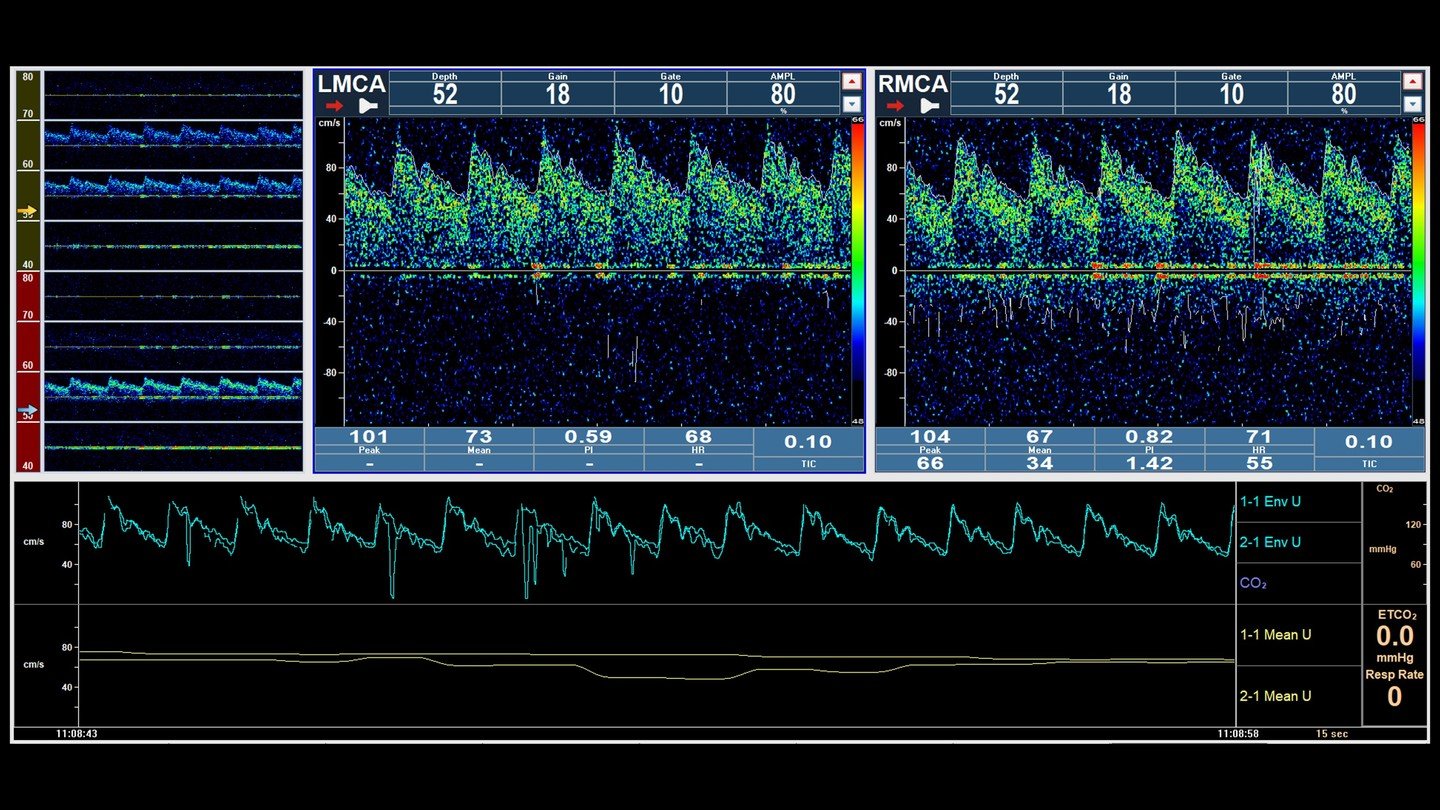
Blood flow velocity to the left and right sides of the brain
Heart rate and blood pressure
End-tidal CO2, the carbon dioxide in each breath out
Breathing rate
Oxygen saturation
Together they tell a story none of them tells alone. For example, if you start breathing fast and shallow, your CO2 falls. Falling CO2 narrows the blood vessels to the brain, and brain blood flow drops with it. Seeing all of it on one screen shows us not just that something changed, but what may be driving it.
We also run Valsalva, deep breathing and breath-hold studies, which help show where in the autonomic response a problem sits.
"Have you ever passed out?" Why that question misleads
Many people with POTS are asked whether they've ever fainted. When the answer is no, their symptoms can get taken less seriously.
But not fainting can be part of the picture. In many people with POTS, the racing heart is the body compensating: working harder to keep enough blood reaching the brain while upright. It feels awful, but it may be exactly what keeps you from passing out.
Measuring brain blood flow alongside heart rate helps sort this out. It can show whether a fast heart rate is keeping brain flow steady, or whether flow is dropping anyway, and that's useful information for you and your physicians.
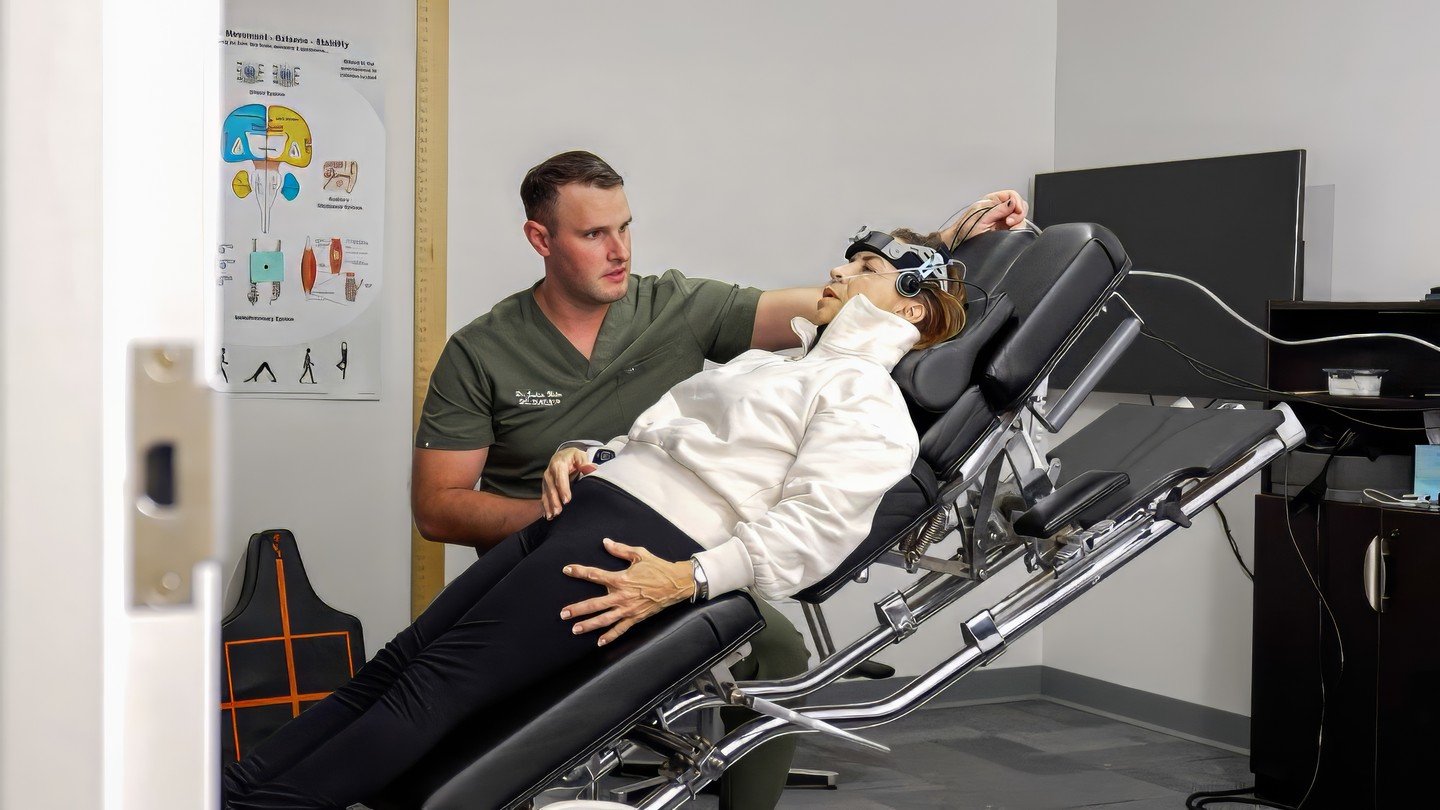
Tilt testing with brain blood flow and CO2 monitoring (demonstration).
What you take home: a report your physicians can use
After testing, you get two things:
Graphs that overlay heart rate, blood pressure, CO2 and blood flow to each side of the brain across the whole test, so the changes can be seen in relation to each other
A written report covering the tilt, Valsalva, deep breathing and breath-hold studies
The tilt protocol is standard, and a hospital POTS physician will recognize it. What we add is brain blood flow, plus a cross-check with your balance, eye movements and neck, which can affect how your body responds to being upright. For example, we check whether turning your head or eyes changes the response.
These results are measurements, shared with your cardiologist, neurologist or POTS physician to add to the picture. They don't replace their diagnosis or their care.
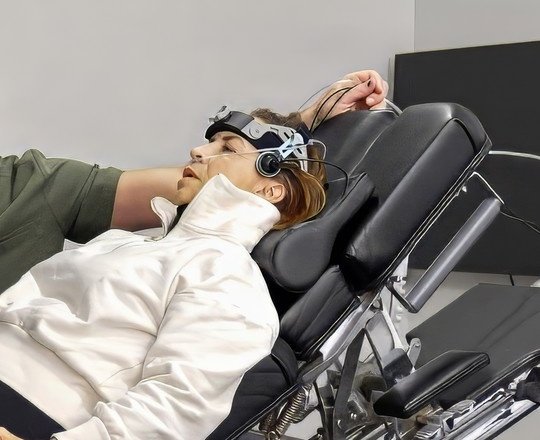
Breath-by-breath CO2 and brain blood flow, measured together (demonstration).
Questions people ask
Is transcranial Doppler safe? Does it hurt? It's a non-invasive ultrasound with no needles or radiation. You wear a headset that holds small probes at your temples.
I've already had a tilt test. Should I bring the results? Yes. Bring any autonomic testing you've had, including sweat testing (QSART). We review it alongside our own results.
Do I need a POTS diagnosis to be tested? No. Many people come in with symptoms when upright that haven't been explained yet.
Will testing make me feel worse? The exam has to challenge your system enough to show what's happening, but we watch every measure closely and stop when the readings tell us you've had enough.
What happens after testing? We go through the results with you, share the report with your physicians if you'd like, and talk about whether our training program is a good fit. POTS and dysautonomia care
Get started
Pro Performance Care, 464 Hillside Ave, Needham, MA. Call (978) 429-8952 or request a consultation online, and tell us about your symptoms and any testing you've already had.