
POTS and Dysautonomia
Care in Needham, MA
You've had the bloodwork. Lyme, mold, anemia and vitamin levels have been checked. You may be on Mestinon, a beta blocker, or a combination of medications. And standing in line, cooking dinner or a trip to the grocery store can still leave you lightheaded, foggy and wiped out for days.
Most of the patients we see with POTS and dysautonomia have already seen many practitioners. What they're looking for is something they can actively do: a structured, closely monitored way to retrain how their body handles being upright, working alongside their physicians and medications.
That's what we do. We measure how your heart rate, blood pressure, breathing and blood flow to your brain respond to standing, all at the same time. Then we use those measurements to guide gentle, repeated training that stays below the point where you'd crash.
Your first day: a full picture, not just a tilt test
Your first visit is a two-hour neurological exam, and the tilt table is only one part of it. How your eyes, inner ear, balance and neck work can change how your body handles being upright, so we test all of them.
The exam is standardized. It needs to challenge your system enough to show us what's happening, and we watch closely the whole time. If the readings tell us you've had enough, we stop. Follow-up sessions are much more flexible.
We start with your full history, then run four sets of tests:
Tilt with continuous monitoring. Heart rate, blood pressure, oxygen, breathing rate, end-tidal CO2 and blood flow to both sides of the brain, recorded together as you're tilted upright. We also run Valsalva, deep breathing and breath-hold studies, which help sort out which type of POTS you may have: hyperadrenergic, low blood volume, or the small-fiber nerve type.
Balance testing (computerized posturography). How you sway, which way, and how that changes with your head turned, eyes closed, or on an unstable surface. It shows how much you're relying on vision, your inner ear or your body sense.
Eye movement testing (videonystagmography). Your eyes are recorded in the dark: drifts, pupil response to light, focusing, tracking, quick eye jumps, and reflexes as you're turned in a chair. Eye movements are a window into the brainstem and cerebellum.
A hands-on exam. Timing and coordination, gait, sensation left to right, and the neck.
That's where we differ from a standard autonomic workup. Many places run a tilt test. We connect it to your eyes, neck and balance. For example, we check whether turning your head or eyes in one direction changes how your body responds to standing, because these systems affect each other.
If you've had a sweat test (QSART) or other autonomic testing elsewhere, bring it. We review it alongside our own results.
For more on why we measure blood flow to the brain, see What standard POTS testing can miss.
Video transcript (Dr. Anderson, neuro exam room): Hey everyone, I'm Dr. Anderson. Welcome to the new ProPerformance space. This is where we do our neuro exams. On your first visit you'll spend about two hours with us. We do our Doppler ultrasound, then come over here for the VOG goggles, which test your eyes. We want to see how your eyes are working. Then we come over here and finish your CAPS balance report, so we can see what's going on with your balance and how we can help. We look forward to seeing you soon.
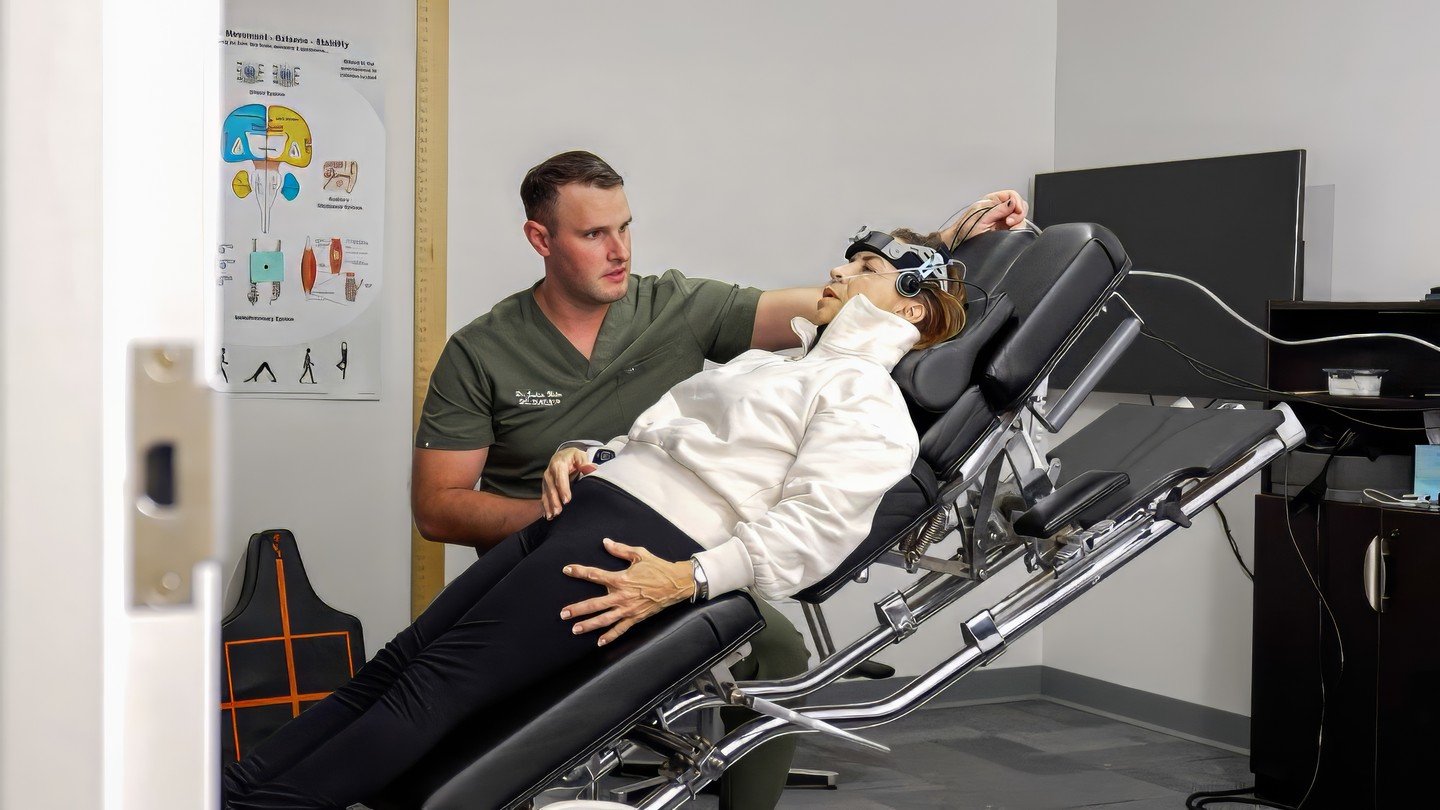
Tilt testing with brain blood flow and CO2 monitoring (demonstration).
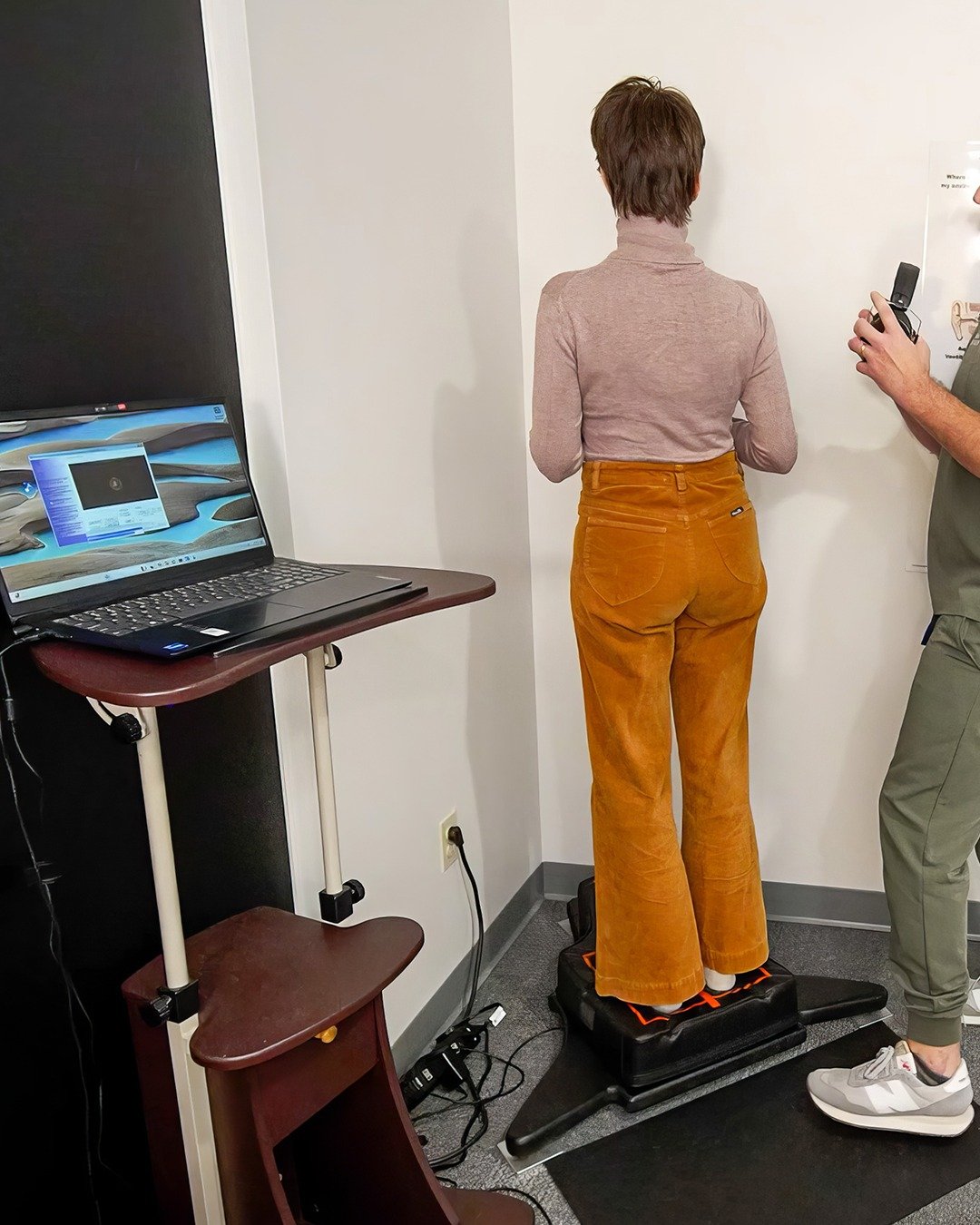
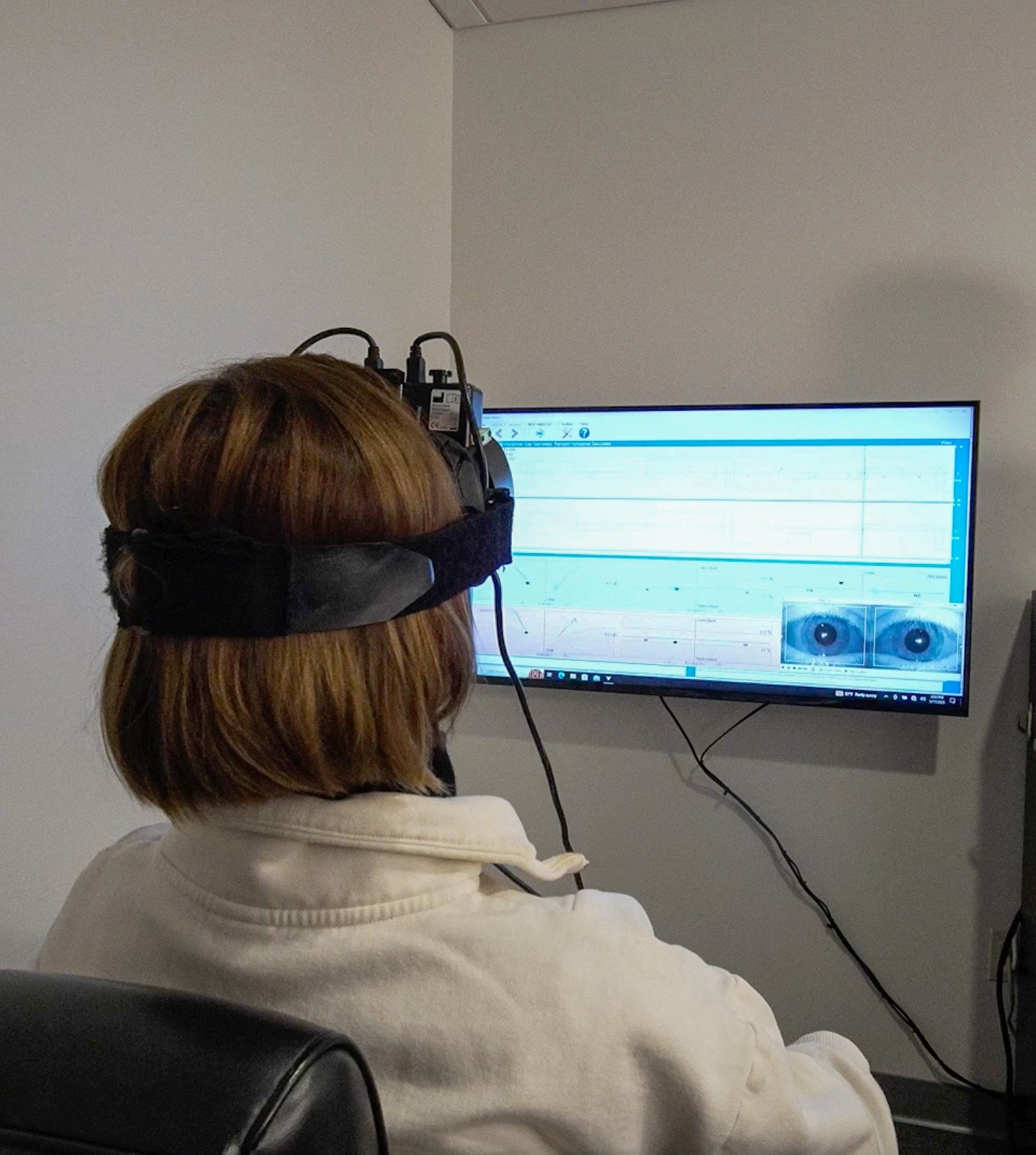
How training works: guided by your numbers, not by pushing through
Many people with POTS breathe a little too fast and too shallow, often without noticing. Over-breathing lowers the carbon dioxide (CO2) in your blood. The body responds by narrowing the blood vessels to the brain and letting blood pool in the belly and legs, so the brain ends up under-supplied. That chain fits many POTS symptoms.
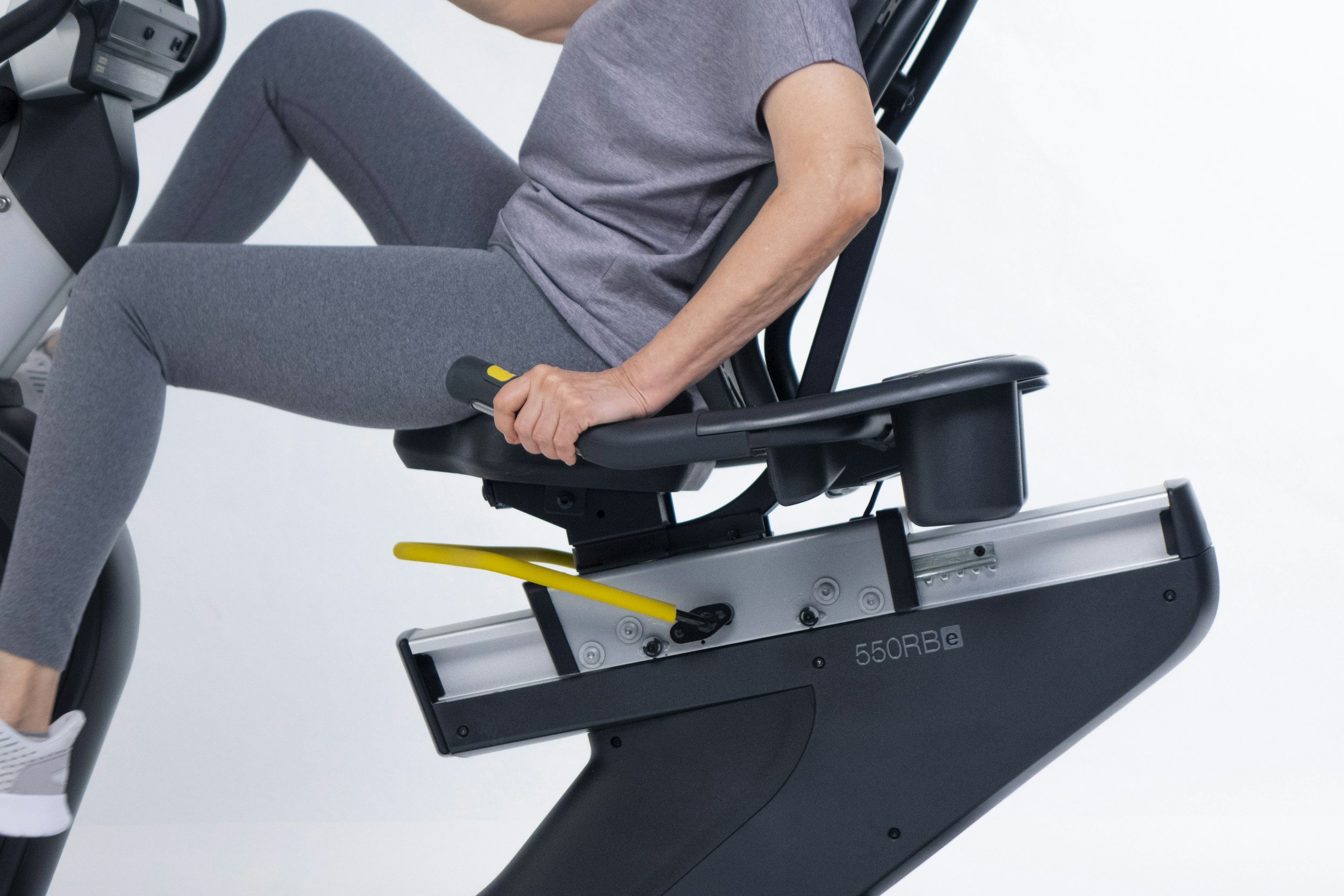
Training helps reverse it. On a recumbent bike and on the tilt table, we monitor your end-tidal CO2 (the CO2 in each breath out) and coach your breathing to keep it in a healthier range for longer. Healthy resting levels are about 35 to 45 mmHg; many of our patients start below that.
While you train, we watch for early warning signs:
Blood flow to the brain dropping and staying down, or drifting steadily lower (our own working rule is a drop of about 10%; it's a clinic threshold, not a published standard)
CO2 falling as breathing speeds up
Pooling in the belly, a rising heart rate, lightheadedness, feeling detached or faint, sweating, anxiety
Never settling once you're upright
When we see them, we adjust in the moment: we lower the table, recalibrate, change the task, or end the session early. The goal is steady, repeated work below the point that would set off a crash.
Not graded exercise therapy. Each session is limited by what your measurements and symptoms show that day, not by a schedule. If you have ME/CFS or post-exertional malaise, see ME/CFS and post-exertional malaise care.
After a session. Most of our patients already know what helps them recover from an overdo day: lying flat, salt, fluids, compression and rest. We build on that with advice for your profile. For some patients, gentle walking or easy cycling helps recovery.
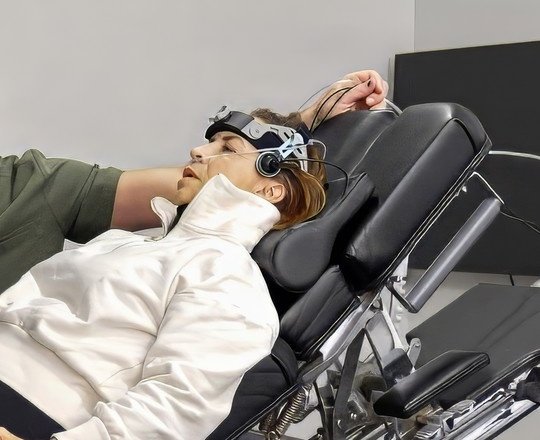
Breath-by-breath CO2 and brain blood flow, measured together (demonstration).
Want the detail? See how EtCO2 monitoring works.
The two-week intensive
Most autonomic patients start with 8 to 10 visits over two weeks, Monday to Friday. Some need two to three weeks or more of near-daily sessions.
Why back to back? The nervous system adapts to what it practices often. Gentle, repeated sessions close together let us build on each day's progress without tipping you into a crash.
What changes over the intensive:
Longer time upright on the tilt table
More resistance on the bike, with CO2 staying in range for longer
More happening at once: balance, eye and timing tasks layered together, without a drop in brain blood flow or CO2
Harder real-life tasks: head turns while walking, floor drills, everyday movements
Faster reactions, tighter timing, harder balance surfaces
At the end, we repeat the first-day tests (except any that weren't relevant for you) so you and your physicians can see what changed.
After the intensive: check-in visits, weekly at first, then monthly. Some patients come back seasonally or once a year. If travel makes daily visits impossible, we can plan shorter bursts of visits with work at home in between. We'll tell you what's clinically best, then fit it to what's realistic for you.
More about the intensive
Working alongside your physicians and medications
We don't replace your cardiologist, neurologist or POTS physician, and we never ask you to stop a medication. Our work runs alongside theirs.
We're used to how common POTS medications change the picture, and we account for them in testing. For example, a beta blocker blunts the heart rate response to standing, so we read your results with that in mind. Patients come to us on medication and off it; either works.
After testing, you get a report you can share: graphs that overlay heart rate, blood pressure, CO2 and blood flow to each side of the brain, plus written results for the tilt, Valsalva, deep breathing and breath-hold studies. Hospital POTS physicians recognize the tilt protocol. What we add is the cross-check with your eyes, neck and balance.
Is this right for you?
We're usually a good fit if:
You've been diagnosed with POTS or dysautonomia, or you have symptoms when upright that testing elsewhere hasn't explained
You want an active, structured part in your recovery, alongside your medical care
You can come in for an intensive, or a planned series of visits
It may be better to wait, or to talk with your physician first, if:
A medication is being adjusted. If you're partway through increasing or changing a dose, we'll usually ask you to wait until things are stable, so we're reading your body rather than the change.
You take many medications. With ten or more, it gets hard to tell what a normal response looks like for you. It doesn't rule you out, but we'll talk it through first.
We're the best fit when testing shows measurable changes in how your body responds to standing. If it doesn't, we'll tell you plainly and help you find the right care.
How we track progress
We measure change rather than guess at it:
Repeat tilt with brain blood flow and CO2 monitoring
Repeat balance and eye movement testing
Cambridge Brain Sciences cognitive testing, before and after
What you tell us: how long you can stand, and what everyday tasks you can manage again
Patients often tell us about being able to stand for longer, cook, shop, drive and think more clearly. Every case is different, and we don't promise specific results.
A representative case. A patient came to us after a sudden decline left them using a wheelchair. Even short periods upright brought on symptoms, and first-day testing showed very poor tolerance of standing. Training began on the tilt table at gentle angles, with breathing and muscle-squeeze cues and a visual target to focus on, while we watched blood flow to the brain and CO2. When flow dropped, we lowered the table, let things settle, and tried again. Over the intensive, the angle and time upright increased step by step, and by the end the patient was walking. Details are changed to protect privacy, and every case is different.
"After many months of severe and complex illness and countless specialists, Dr. Helm was the first doctor to truly listen to me, not discount serious symptoms, create a care plan based on objective and measurable data, and consistently meet me with empathy and a clear desire to improve my quality of life." Allison C., Google review
"I came to see Dr. Helm experiencing a case of autonomic nervous system dysregulation (dysautonomia, with increased sympathetic activity), specifically triggered by my posture / physical activity. … I am still on the mend and not 100% yet, but I finally feel like I am on the right track and making progress." Harrison C., Google review
"Dr. Anderson and Eva were so helpful with all my care, they know a ton about POTS / dysautonomia / concussion / migraine and have lots of tools and technology to help you work on those issues. I made a lot of progress right after my full course of treatment…" Elias N., Google review
Questions people ask
Do I need a POTS diagnosis to come in? No. Many patients come with symptoms when upright that haven't been explained yet. Our testing can add useful information for your physicians.
Do you take insurance? We're a cash-pay clinic. We give you a superbill you can submit to your insurance for possible reimbursement.
I'm coming from out of town. How does that work? Many patients plan their stay around the two-week intensive. If that isn't possible, we can plan shorter bursts of visits with work at home in between.
Will I crash after sessions? We design sessions to avoid that. We stop or adjust when your measurements show early warning signs, and we help you plan recovery for the following day or two.
Do you also see ME/CFS and long COVID? Yes. Many of the same tools apply, especially the CO2 monitoring and symptom-limited pacing. ME/CFS and post-exertional malaise · Long COVID
Get started
Pro Performance Care, 464 Hillside Ave, Needham, MA. Call (978) 429-8952 or request a consultation online, and tell us a little about your symptoms and the testing you've already had.