
How EtCO2 Monitoring Works: A Closer Look
This is the detailed version, for patients, families and clinicians who want to understand the CO2 monitoring mentioned on our condition pages. If you'd rather start with the overview, see ME/CFS and post-exertional malaise, POTS and dysautonomia or long COVID.
What end-tidal CO2 measures
Every breath out carries carbon dioxide (CO2). End-tidal CO2, or EtCO2, is the level of CO2 at the very end of each breath out, when the air coming from your lungs is closest to what's in your blood.
We sample it through a soft nasal cannula connected to a capnometer, which reads CO2 continuously and draws it as a wave with every breath. In people with healthy lungs, EtCO2 tracks the CO2 level in the blood closely, so it gives us a non-invasive, breath-by-breath window into it. The same trace also shows breathing rate and pattern.
Why CO2 and blood flow to the brain move together
The blood vessels in the brain are especially sensitive to CO2. When CO2 falls, they narrow; when it rises, they widen. That's why breathing pattern matters so much when you're upright or active.
Healthy resting EtCO2 is about 35 to 45 mmHg. Many people with POTS, ME/CFS or long COVID breathe a little too fast and shallow, often without noticing, and start below that range. Here's the chain that follows:
Over-breathing lowers CO2 in your blood.
Blood vessels to the brain narrow in response, and blood tends to pool in the belly and legs.
Your brain ends up under-supplied, which fits many familiar symptoms: lightheadedness, brain fog, feeling detached, a racing heart.
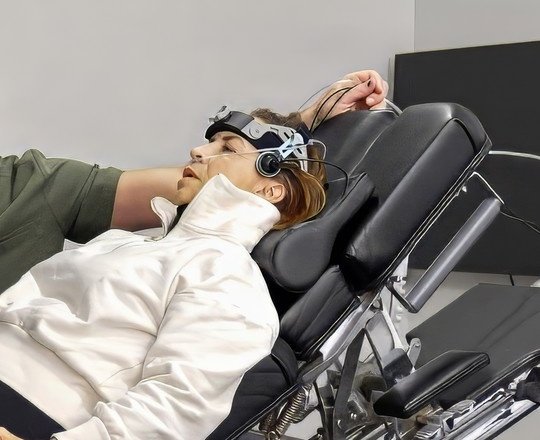
Breath-by-breath CO2 and brain blood flow, measured together (demonstration).
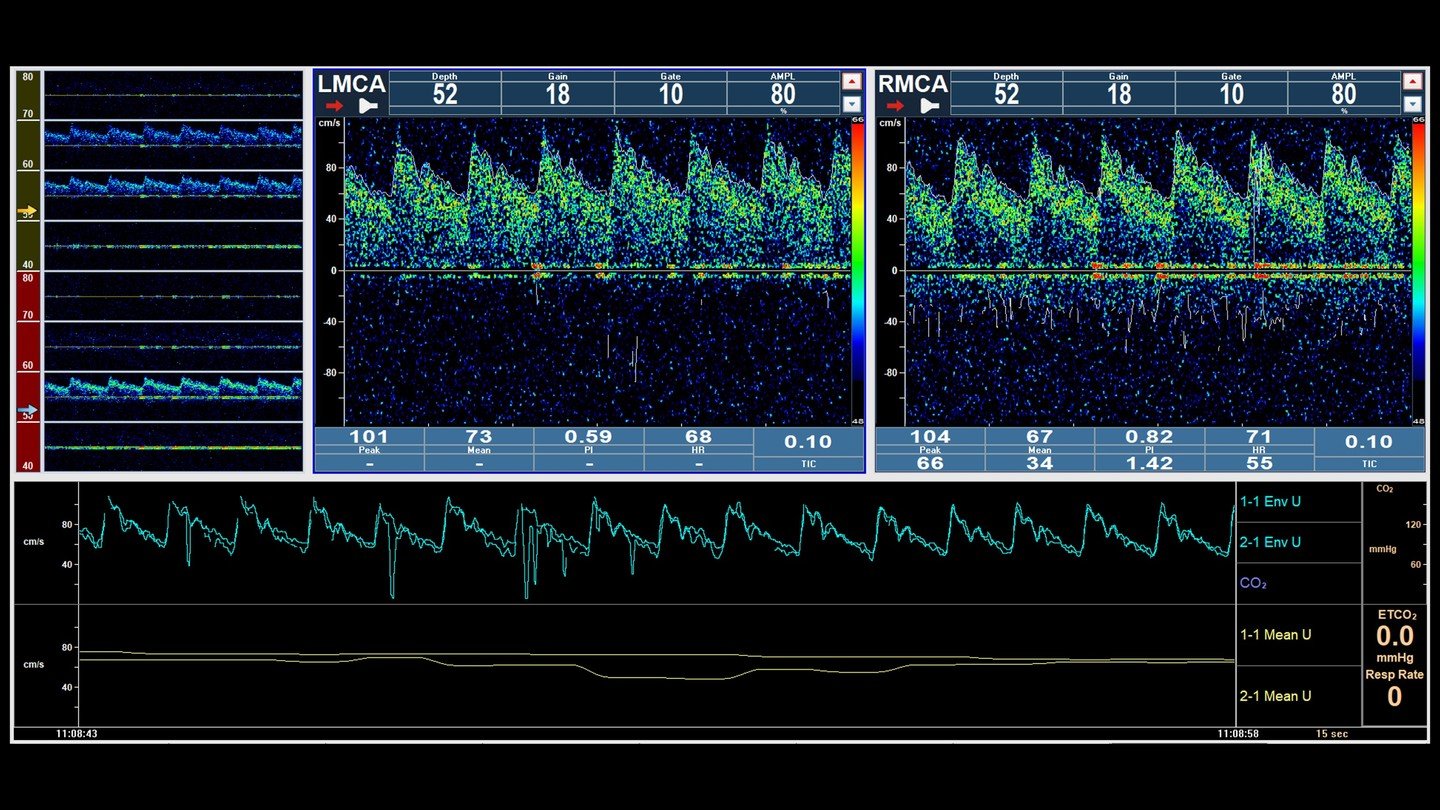
Reading CO2 alongside the other measures
CO2 on its own tells part of the story. During testing and training we record it on one screen with:
Blood flow velocity in the middle cerebral arteries, left and right, with transcranial Doppler
Heart rate and blood pressure
Oxygen saturation
Breathing rate
Seen together, the patterns are more useful than any single number. If CO2 falls and brain blood flow follows, breathing is likely a big part of what's happening, and breathing work becomes a focus. If brain blood flow drops while CO2 holds steady, we look harder at blood pressure and the other measures. These are measurements we share with your physicians; they add to the picture rather than replace a diagnosis.
For more on brain blood flow testing, see what standard POTS testing can miss.
How it shapes a session
You'll train on a recumbent bike or the tilt table, wearing the nasal cannula and, often, a lightweight Doppler headset. While you work, we coach your breathing to keep CO2 in a healthier range for longer, and we watch for early warning signs: CO2 falling, brain blood flow dropping and staying down, or symptoms building. When they appear, we lower the effort, lower the table, or end the session.
Over time, the same readings show progress: more resistance on the bike, more time upright, and more going on at once, with CO2 holding steady.
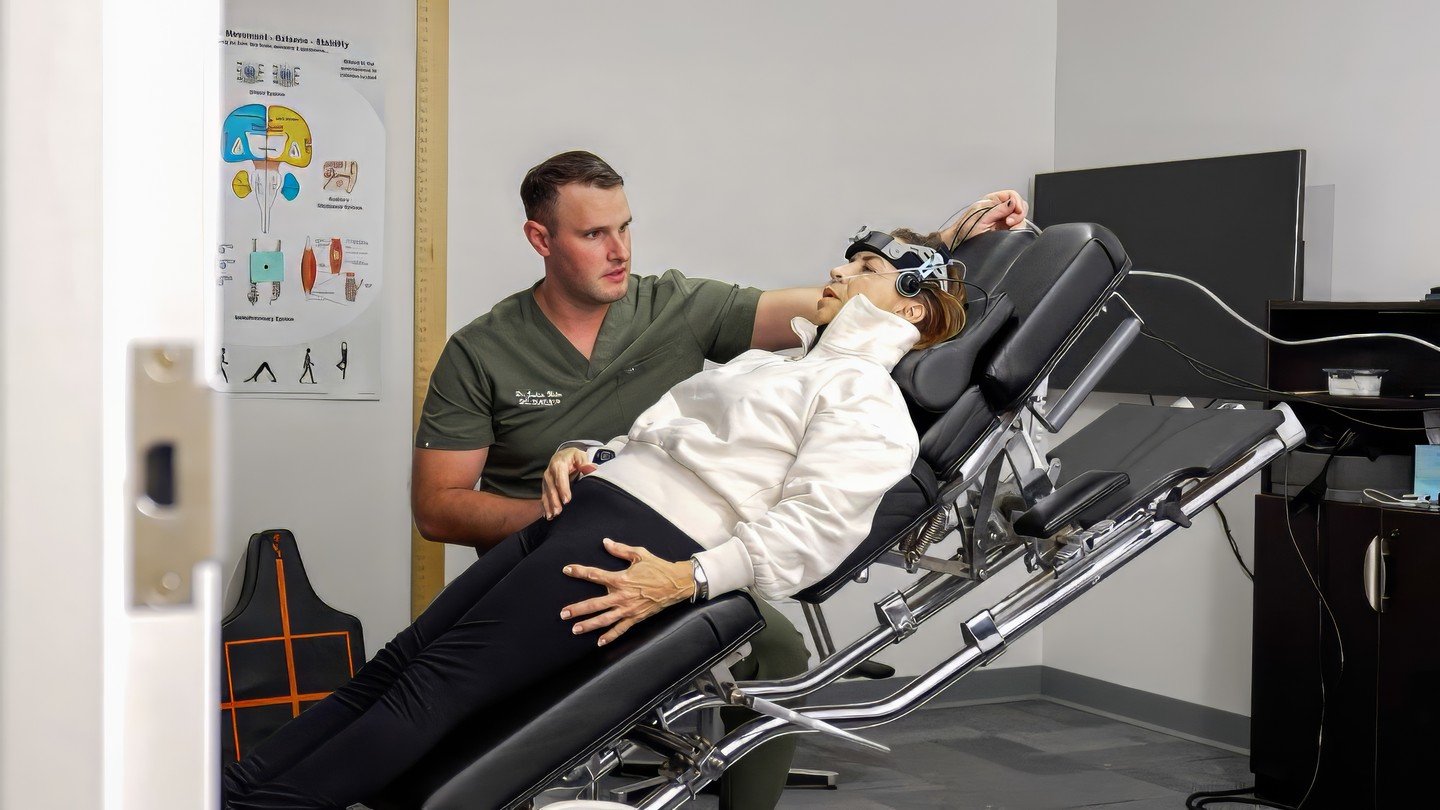
Tilt testing with brain blood flow and CO2 monitoring (demonstration).
Questions people ask
Is the cannula uncomfortable? It's the same soft nasal tubing used for oxygen, resting just inside the nostrils. Nothing is pushed in, and it doesn't hurt.
Is there anything to do at home? Yes. Every program includes a home plan, built from what we see in your sessions.
Is EtCO2 a diagnosis? No. It's a measurement. We share it with your physicians to add to the picture alongside their own testing.
Who is this for? People with POTS and dysautonomia, ME/CFS and post-exertional malaise and long COVID, and anyone whose symptoms worsen when they're upright or active.
Get started
Pro Performance Care, 464 Hillside Ave, Suite 211, Needham, MA 02494. Call (978) 429-8952 or request a consultation online.