
Home › Conditions › Vertigo & Dizziness
Vertigo and Dizziness Treatment in Needham, MA
Dizziness that hasn't settled is rarely one problem. We test the inner ear, eyes, neck, balance and blood flow together, find what is driving your symptoms, and build your rehab from the results.
No referral needed · Progress measured by retesting
What kind of dizziness is it?
People describe dizziness many ways: the room spinning, you spinning, rocking, swaying side to side, or just feeling off. Words often seem to downplay it. Where it comes from matters more than the word, because each source calls for different care.
| Where it starts | What it often feels like | Examples |
|---|---|---|
| Inner ear (peripheral) | Spinning that comes in episodes, often with head or position changes | BPPV, vestibular neuritis, Meniere's |
| How the brain processes balance (central) | Constant unsteadiness or rocking, worse in busy places | PPPD, after a concussion, vestibular migraine |
| Eyes working with the inner ear | Screens, scrolling, store aisles and moving crowds set it off; eyes tire quickly | After a concussion, after an inner-ear injury |
| Neck | Dizziness with neck movement, neck tension or guarding | Whiplash, concussion |
| Blood flow on standing | Lightheaded upright, close to fainting, better lying down | POTS, orthostatic intolerance |
Most lingering dizziness is a mix of these. That is why we test them together instead of one at a time.
Not sure which fits? Try the quick checker
Tick everything that fits. It takes about a minute and shows which of the five systems behind dizziness your answers point to. Nothing you tick is saved or sent anywhere.
Your answers point to
This isn't a diagnosis. Most people we see have more than one of these going on at once, and they often feed each other. That's why your first visit tests all of them, with eye recordings, balance testing, the neck exam and blood flow on standing, and why we retest to show what's changing.
Conditions we see
Most patients come to us after an ENT, neurologist or primary care workup, often unsure which diagnosis fits.
Dizziness after a concussion
Inner ear, eyes, neck and blood flow tested together, weeks or months after the injury.
Read moreVertigo, BPPV, vestibular neuritis, PPPD
Testing that tells inner-ear problems from brain-processing ones, in every plane of movement.
Read moreMeniere's, acoustic neuroma
Rehab alongside your ENT's care, to improve daily function. Co-managed with ENT.
Less common neurological causes
A broad neurological workup when the usual answers don't fit.
Read moreHow we find the cause
The right test comes before the right treatment. On your first visit, one doctor reads all of these together:
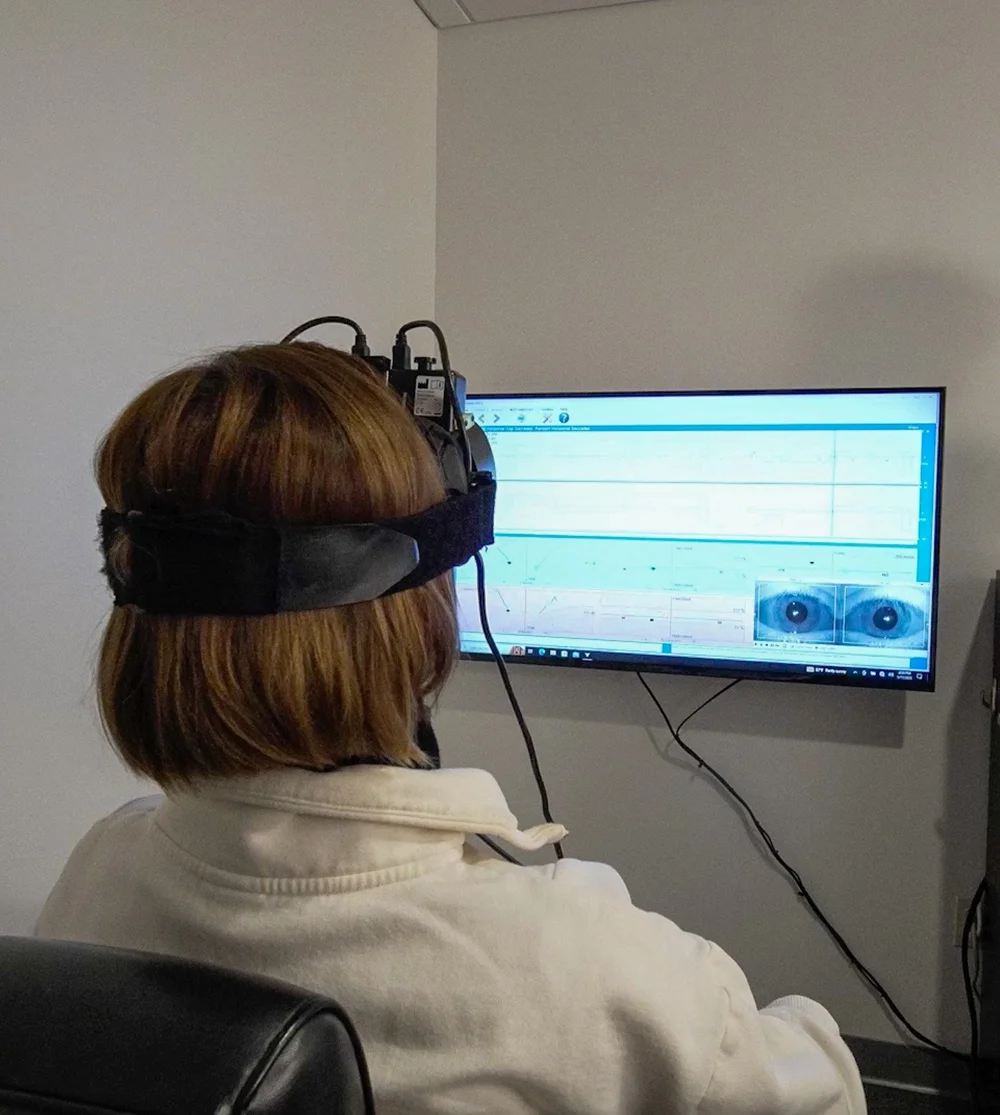
- Video eye recordings (VNG): eye drifts at rest, optokinetic responses to full-field visual motion, saccades, and the vestibulo-ocular reflex (VOR) and its suppression during head movement.
- Every plane of movement: your inner ear senses rotation (pitch, yaw and roll, through the semicircular canals) and straight-line movement (bob, heave and sway). We can test rotation in a rotary chair, up-and-down movement on a hydraulic table, and side-to-side movement. Which planes we test depends on your other results and the symptoms you describe. Many patients have never had these planes tested at all.
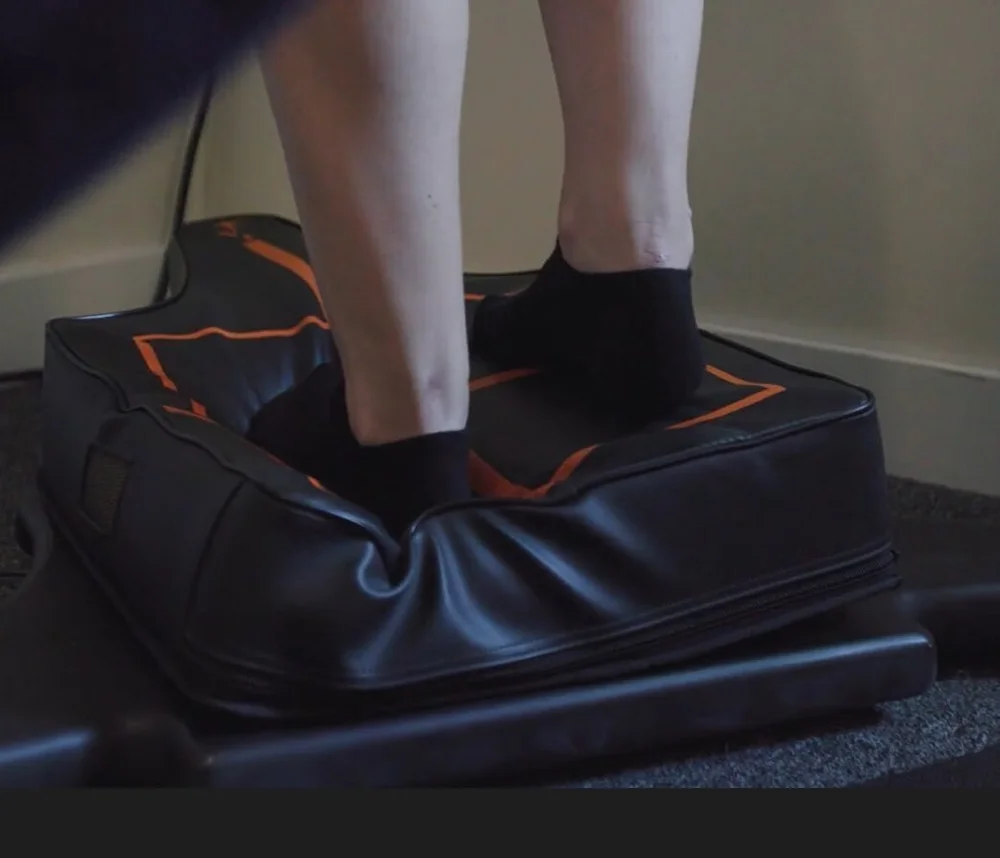
- Computerized balance testing on firm and unstable surfaces, eyes open and closed, in different head positions.
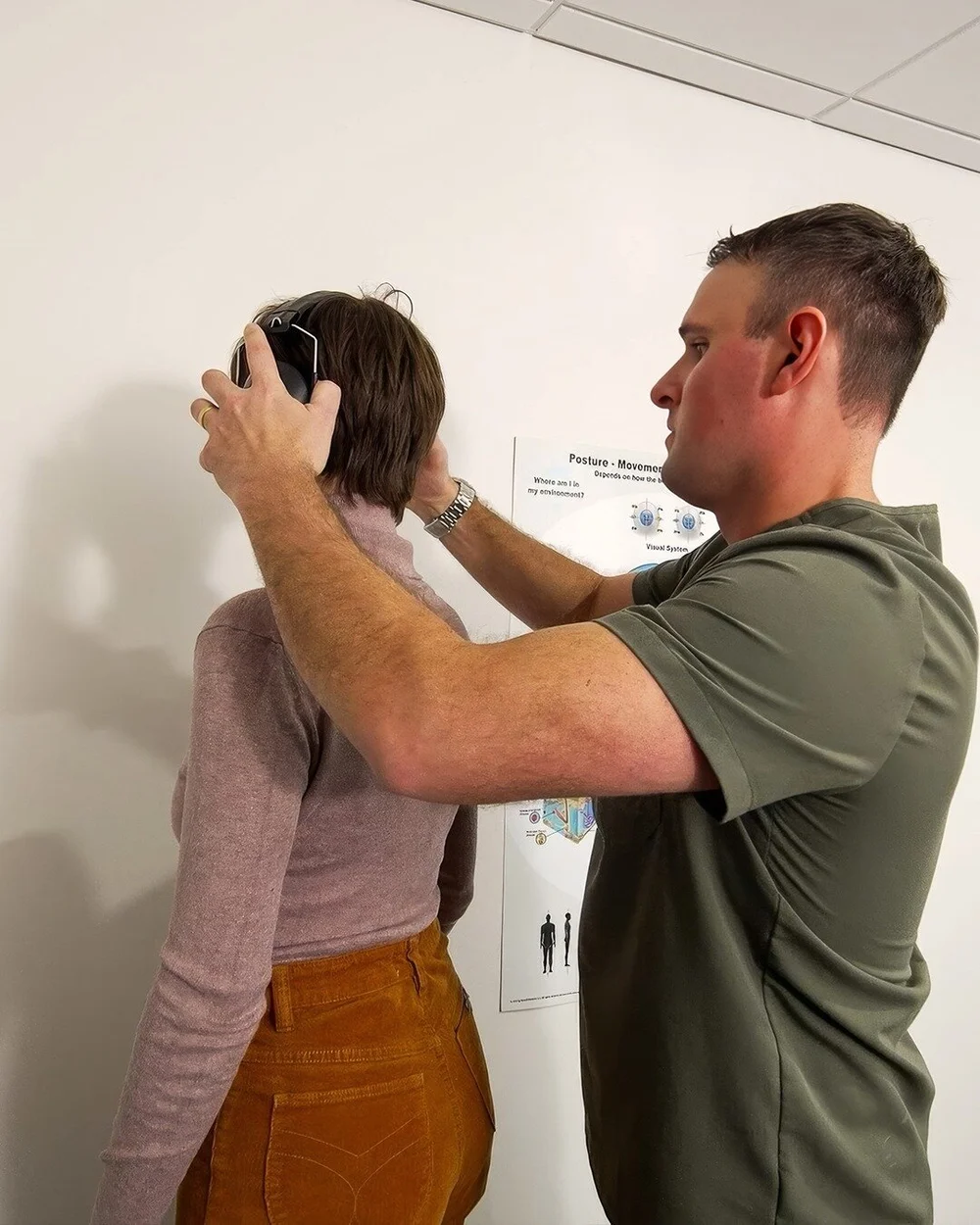
- Your neck: a hands-on exam of tension, guarding and how it affects your eyes and balance.
- Blood flow to the brain and CO2, when standing up makes things worse.
These tests are rarely found together outside a hospital. Even in hospitals, they're split across departments that seldom coordinate one rehab plan, and rehab often happens somewhere else. Here, the same team runs your tests, builds your rehab from them, and keeps using the same equipment throughout your care to measure your progress. You see your own recordings and we explain them. Read the full testing detail.
How care works
There is no standard dizziness plan. Your sessions are built from your own test results, and several therapies run at once (therapy stacking), so each visit works on the specific points your testing found.
- Some patients need their head kept still while we train precise eye movements and optokinetic integration.
- Others do best with neck work combined with head-position feedback, balance and eye drills.
- Repositioning maneuvers like the Epley, rotary chair turns, and walking drills (including walking backwards) are used when they fit.
Care is frequent up front, then tapers to check-ins with a home plan built from your results. Patients who travel often start with an intensive of daily sessions. Progress is measured by repeating your first-day tests.
Two recent patients
A gymnast who couldn't drive, shop or look at a screen after hitting her head. Her eyes drifted at rest; after care, the drift and the light sensitivity were gone and she's back to reading and working.
Her storyA woman with two weeks of sudden, unexplained vertigo that didn't fit BPPV. Within three days her eye recordings were trending back toward normal.
Her storyQuestions people ask
Is vertigo always loose crystals in the ear?
No. Loose crystals (BPPV) are one cause, and less common after a head injury than people think. The inner ear, its nerve, how the brain processes balance, the neck and blood flow can all be involved.
Is my dizziness just anxiety?
Being dizzy is anxiety-provoking. That doesn't mean anxiety is causing it. Our testing looks for the physical drivers, and we're used to patients who feel both.
Will it fade on its own?
Sometimes. When it has lingered for weeks or months, specific testing shows what is still holding it up.
Do I need a referral?
No. You can call us directly, and one of our doctors offers a free phone consult first.
Will testing make my dizziness worse?
It can be tiring, but it usually doesn't cause a flare. When it does, the flare is mild and comes the same day. We adjust tests to how you're doing, and we've never seen lasting worsening from test day.
How long does care take?
It depends on your findings. Acute problems like BPPV often need a short course; long-standing patterns like PPPD may take longer, or respond quickly to an intensive.
When to get urgent care
Go to the emergency room for dizziness with any stroke signs: sudden facial weakness, sudden arm weakness or numbness, slurred speech, sudden confusion or a sudden severe headache. Sudden, unexplained dizziness deserves extra caution. After a significant head injury, initial imaging can be warranted to rule out bleeding before rehab begins.
Get started
Pro Performance Care, 464 Hillside Ave, Suite 211, Needham, MA. Patients come from Needham, Wellesley, Newton, Dedham, across Greater Boston and farther.
Local patients
Free phone consult
Talk with one of our doctors about your symptoms and whether a full evaluation is the right next step.
Request a call backTraveling from out of town
Plan an intensive
Patients who travel often come for an intensive of daily sessions. We talk through the format and cost on the free phone consult.
Request a call backNo referral needed · Progress measured by retesting · (978) 429-8952