
Functional Neurology
in Needham, MA
Functional neurology is a rehabilitation approach built on clinical neuroscience. It looks at how your nervous system is working, including balance, eye movements, coordination and your body's response to being upright, and uses targeted, repeated training to help it work better. Many people find benefit when other care hasn't fully resolved their symptoms.
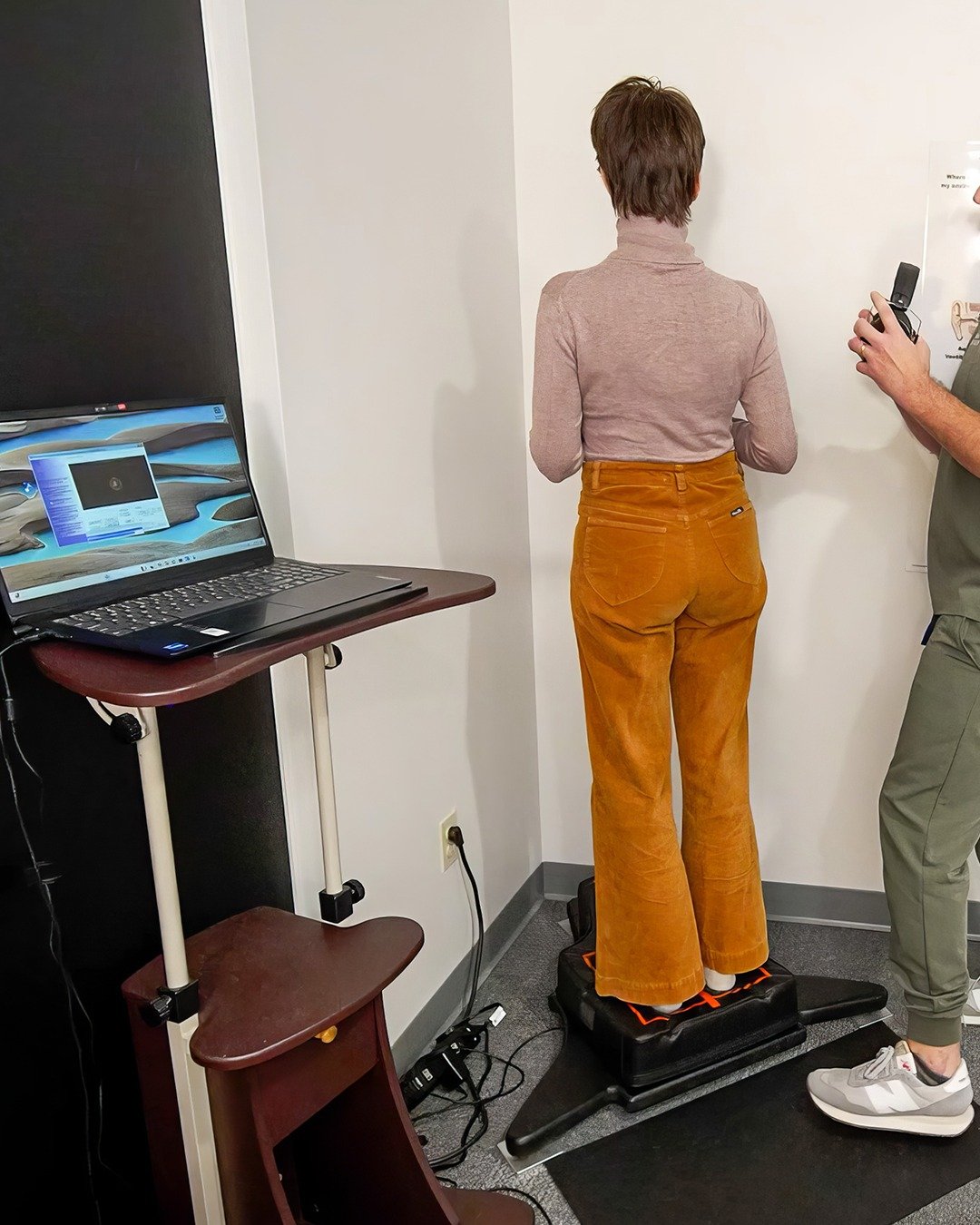
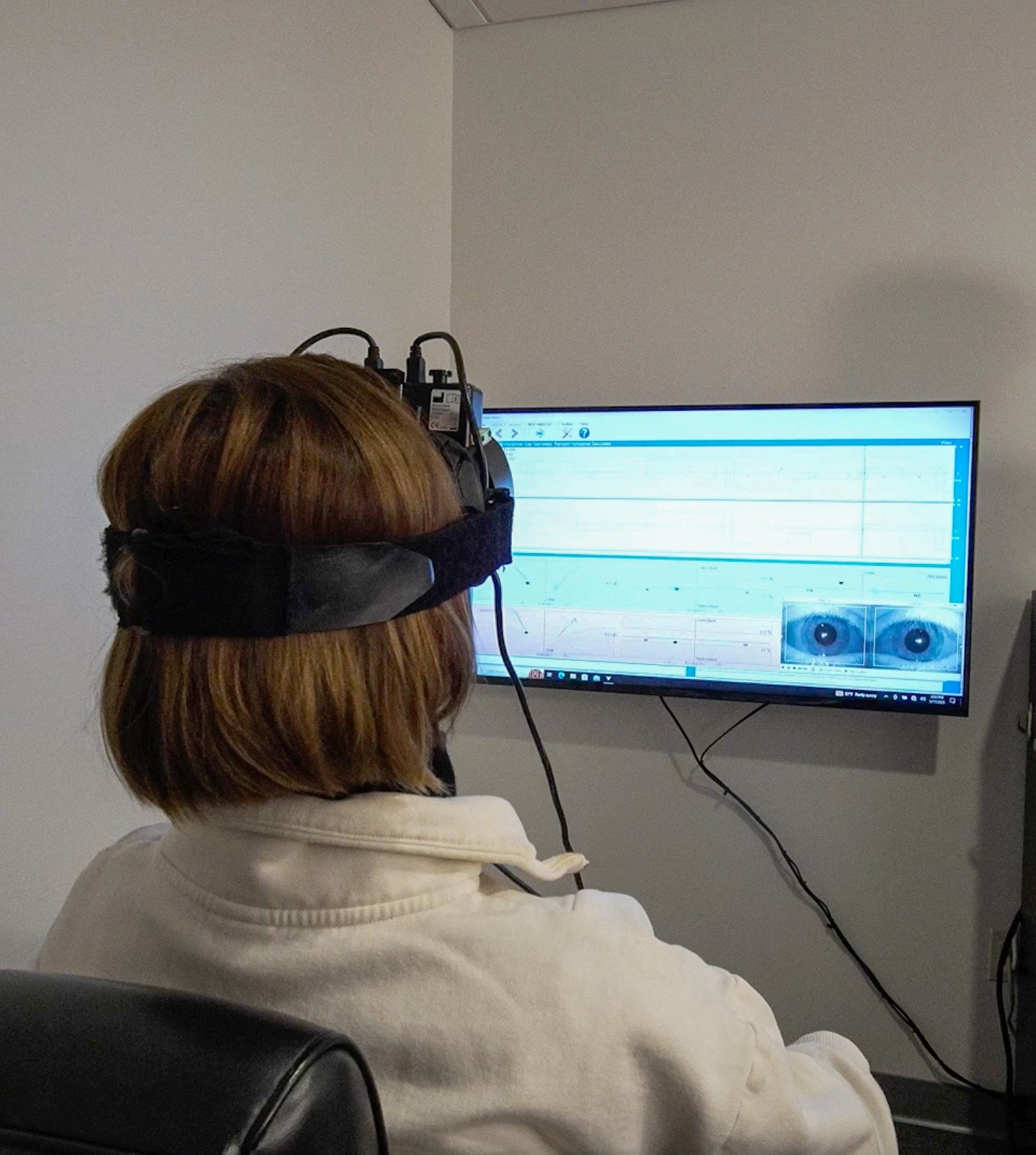
Our doctors are board certified for this type of neurological rehabilitation (DACNB), earned through specialized postdoctoral training and education. Our testing goes well beyond a typical exam: computerized posturography, video eye-movement testing, tilt testing with transcranial Doppler and CO2 monitoring, motor sequencing and timing, reaction time, cognition and working memory, cervical, muscular and thorough bedside assessments in one clinic, read together to build one plan.
How functional neurology works
Instead of asking only whether part of the nervous system is damaged, functional neurology asks how well its systems work together, and trains the ones that aren't keeping up.
Care is careful and cautious. We use specific inputs through your eyes, inner ear, body movement and other pathways to help the nervous system work better. The goal is change through neuroplasticity: the brain's ability to reorganize and form new connections with the right kind of repeated practice.
Every plan starts with a thorough examination, a review of your records, and a conversation with you and, when needed, your other specialists. If we believe there's a reasonable chance of improvement, we'll discuss options with you. People respond differently, so we can't predict exactly how anyone will respond, but we measure as we go so you can see what's changing.
How we work
Test first. A standardized first-day exam: computerized balance testing, eye movement testing in the dark, a tilt with brain blood flow and CO2 monitoring, and a hands-on neurological exam that includes the neck. No single test tells the story; the full picture does.
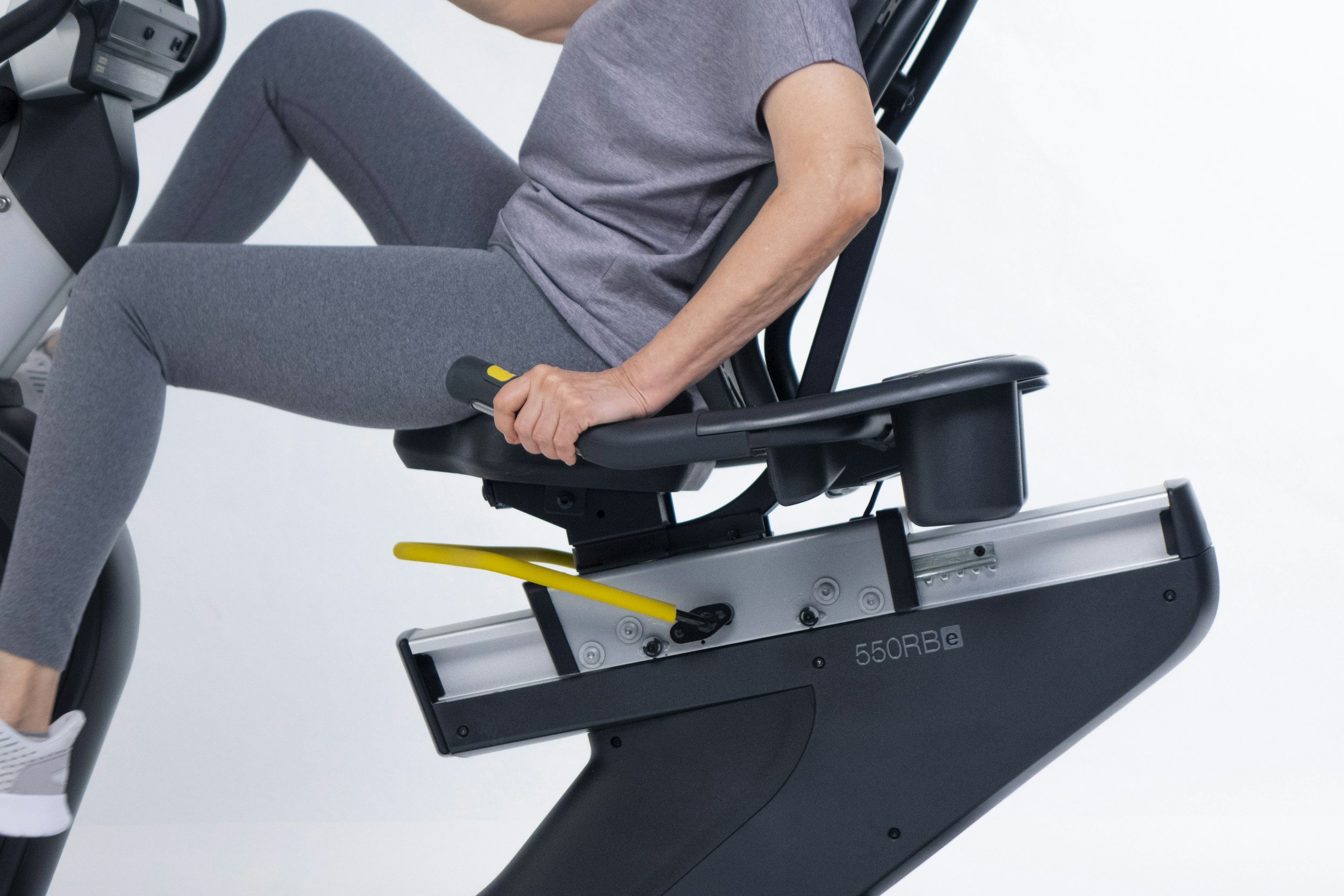
Build a plan from your results. Sessions combine the therapies your testing points to, from eye and balance work to monitored tilt and bike training, timing drills and breathing work.
Train intensively, then taper. Most programs start with daily visits over one to two weeks, because the nervous system adapts best to gentle, frequent repetition. Check-ins follow, weekly and then monthly.
Measure again. We repeat the first-day tests at the end, so you and your physicians can see what changed.
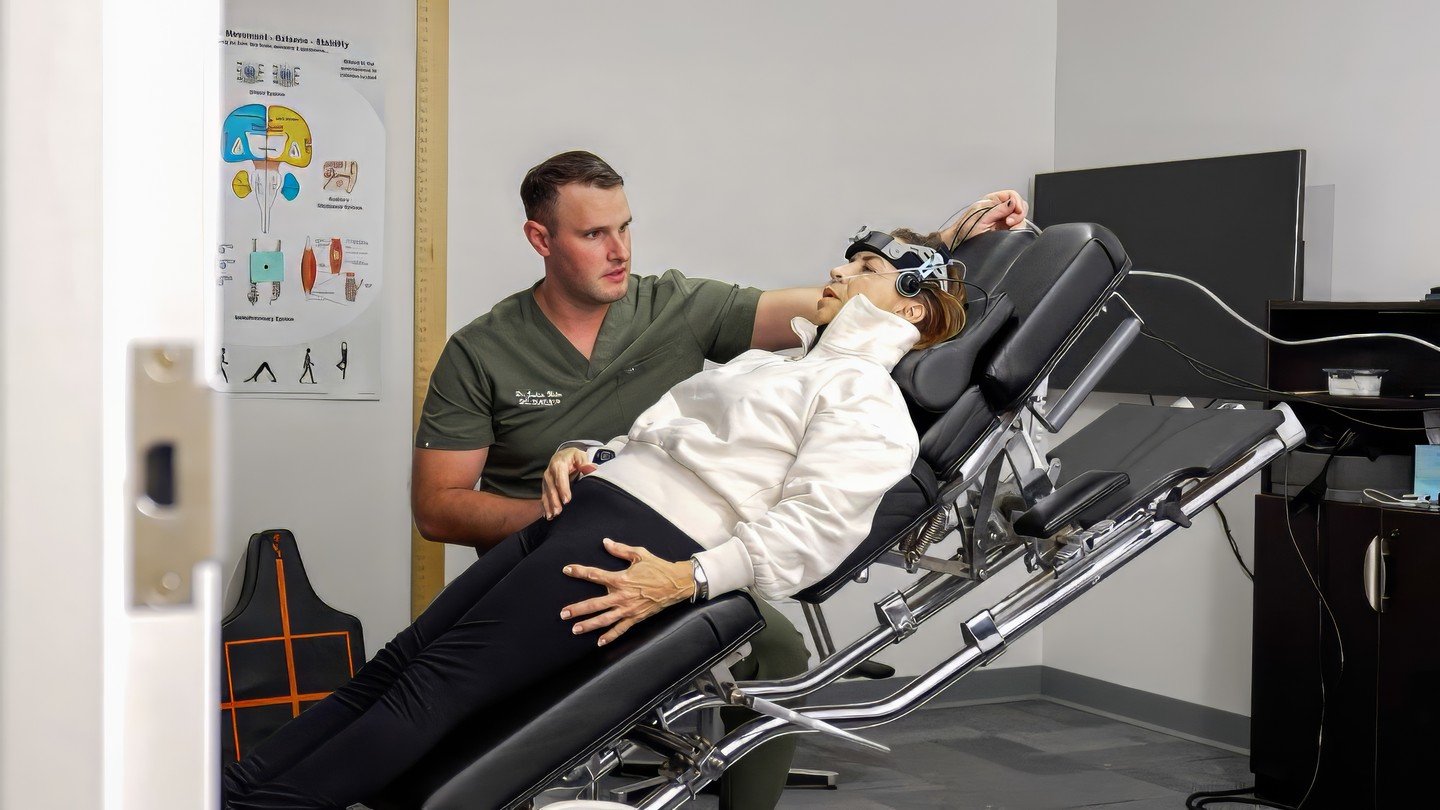
Tilt testing with brain blood flow and CO2 monitoring (demonstration).
Conditions we see
Persistent concussion symptoms: still stuck weeks or months after a head injury, often after being told your scans are clean. Concussion Recovery
POTS and dysautonomia: dizziness, racing heart, brain fog or exhaustion when upright. POTS and Dysautonomia
ME/CFS and long COVID: with monitored, symptom-limited training designed to avoid crashes
Dizziness and vertigo: including vestibular neuritis and PPPD
Children's neurodevelopment: attention, sensory sensitivity, coordination, and children on the autism spectrum. NeuroDevelopment
Stroke recovery: helping the brain rebuild function after injury
Cognitive health: for adults who want to protect or sharpen brain function
Neck pain: especially when it's tied to headaches, dizziness or vision problems
Our team
DACNB stands for Diplomate of the American Chiropractic Neurology Board. Full bios for our doctors are on the Meet the Team page.
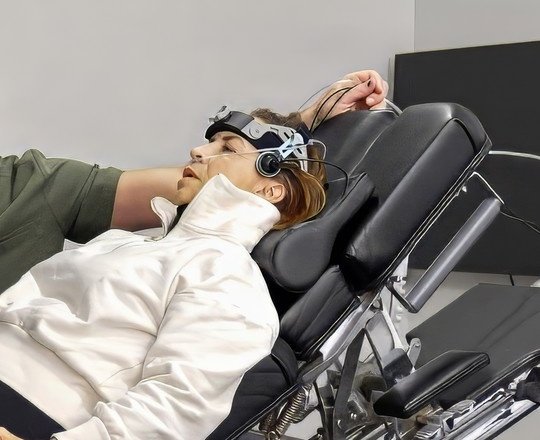
Breath-by-breath CO2 and brain blood flow, measured together (demonstration).
Choosing a clinic: questions worth asking
Many clinics now describe their work as neurological rehabilitation, and training and equipment vary a lot. These are good questions to ask any clinic. Here are our answers.
Is anyone on the team board-certified in functional neurology? Yes. Dr. Helm and Dr. Ellis are board-certified through the American Chiropractic Neurology Board (DACNB).
Do you measure blood flow to the brain? Yes. We use transcranial Doppler on the left and right middle cerebral arteries, recorded alongside heart rate, blood pressure, breathing and CO2.
How do you know if it's working? We repeat the first-day tests at the end of an intensive and share the results with you and, if you'd like, your physicians.
How do you prevent crashes? We watch brain blood flow, CO2 and your symptoms throughout each session, and we adjust or stop when early warning signs appear.
Questions people ask
Is a functional neurologist a medical doctor? No. Functional neurologists are rehabilitation specialists with board certification in functional neurology. Neurologists are medical doctors who diagnose and treat with medication and other medical care. The two roles complement each other, and we often work alongside our patients' neurologists.
Do I need a referral? No referral is needed to book a consultation.
Do you take insurance? We're a cash-pay clinic. We give you a superbill you can submit to your insurance for possible reimbursement.
I live far away. Is it worth the drive? Many patients travel 60 to 80 miles, and some plan a stay around an intensive program of daily visits. If daily travel isn't realistic, we can plan shorter bursts of visits with work at home in between.
Visit us
Pro Performance Care, 464 Hillside Ave, Suite 211, Needham, MA 02494. Serving Needham, Greater Boston and patients who travel 60 to 80 miles to see us. Call (978) 429-8952 or request a consultation online.